


Latest news

According to the latest Forrester research, as AI expands its role in contact centers, the U.S. customer service labor market is experiencing contraction, with job postings down about 10% from pre-pandemic levels. Over the next five years, lower-level automatable positions will decrease, while new knowledge-based roles created by AI will increase.

As AI becomes increasingly prevalent in contact center applications, customer experience leaders are undergoing profound changes in workforce management. Based on a panel discussion at Customer Contact Week in Las Vegas, this article synthesizes practical perspectives from executives at Talkdesk, InfoPay, Five9, and other companies, emphasizing the importance of transparent communication, employee engagement, and rational technology selection.

Priceline's '2026 Summer Travel Status Report' shows that 73% of Americans plan to achieve summer travel at all costs, but 84% believe travel value for money has declined. Hoteliers such as Choice Hotels and Marriott International are responding to travelers' pursuit of value and flexibility through experiential activities, loyalty program upgrades, and partnership marketing.

A survey released by Laivly shows that although most CX leaders claim AI projects are successful, 53% exceeded budget, 43% were delayed or stalled, and 28% of leaders attributed revenue loss to AI's inability to handle customer complexity. Gartner analyst Ian Elliot notes that the disconnect between leadership perception and reality stems from market pressure, misaligned personal incentives, flawed performance metrics, and insufficient accuracy of AI tools.
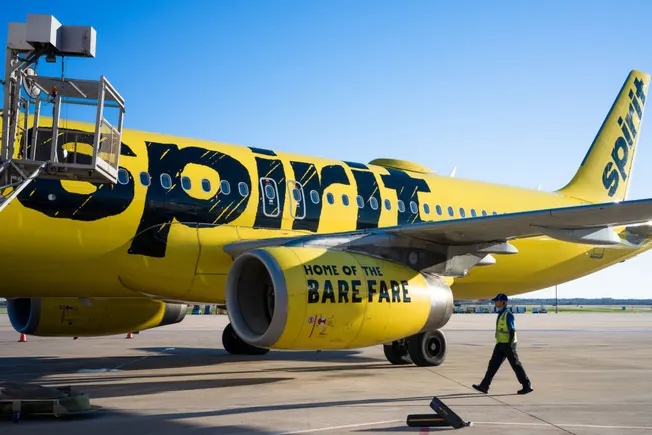
When a brand ceases to exist, customer experience management is often neglected, but how it is handled directly impacts asset sale value and customer retention. Experts point out that CX strategies in full shutdown scenarios differ significantly from those in mergers and acquisitions: the former requires seizing the final communication window during bankruptcy liquidation, while the latter involves bridging brand positioning gaps and preventing customer churn. This article analyzes common mistakes and response frameworks using cases such as Spirit Airlines' shutdown and Hudson's Bay's liquidation.

Decagon, through tools such as Agent Operating Procedures and Duet, enables companies to deploy AI agents for complex customer service workflows within three weeks, whereas previously using competitors required nine months. Multiple enterprises (such as a global airline, a music streaming platform, a social network, and a health insurance company) have achieved rapid deployment and high success rates. The article emphasizes that enterprise software should activate rather than appropriate customer relationships, and Decagon's glass-box design gives operators control over iteration speed instead of relying on vendors.
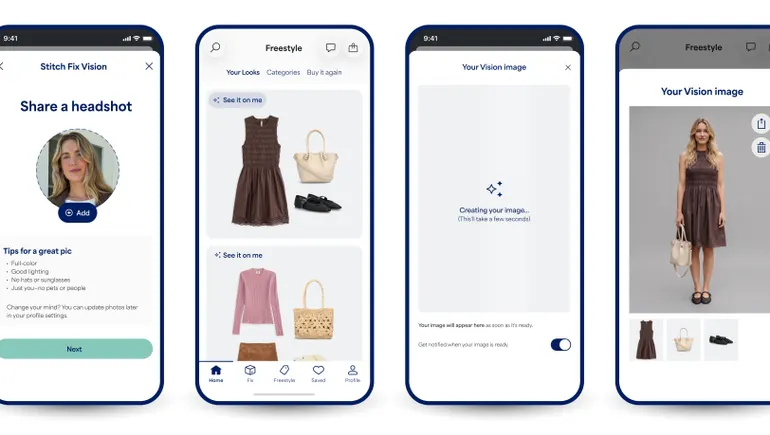
Stitch Fix announced last week the expansion of its AI-driven style visualization platform, Stitch Fix Vision, allowing users to upload selfies via the mobile app to generate AI images wearing recommended clothing. The feature is available on demand at any time and automatically saves the generated looks to a personal style library. This move follows the company's third-quarter performance growth, with net revenue increasing 4.7% year-over-year to $340 million, and active clients rising to 2.3 million.
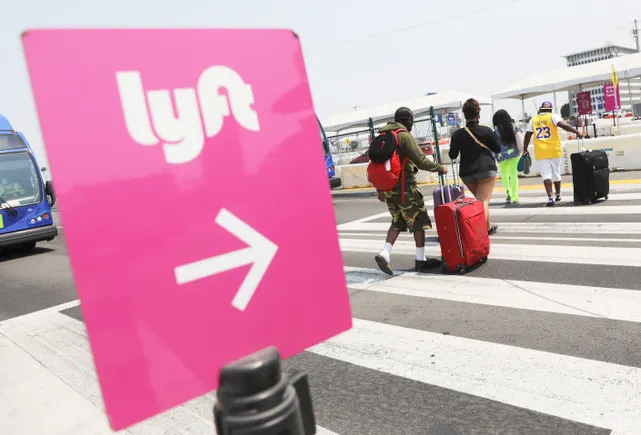
The loyalty program partnership announced by United Airlines and Lyft this spring sets a precedent for direct mileage redemption for rides between a U.S. airline and a ride-hailing platform. Experts believe that, given the absence of direct competition between the two, this model is likely to achieve a win-win outcome. For United Airlines, the move can accelerate member point redemption and attract low-frequency travelers; for Lyft, it can leverage business travel scenarios to boost average order value and order volume. Industry analysts suggest that brands should focus on complementarity and phased goals when expanding such partnerships.

An EY survey of more than 1,600 high-income consumers across 11 markets shows that physical stores remain the preferred purchase channel for aspirational luxury consumers, with significantly higher satisfaction than brand websites. The attentive service, human interaction, and style advice offered in stores are core attractions, while AI technology is seen as a supporting tool that can enhance the shopping experience.

AI technology promises to expand customer service operations and improve efficiency, but actual results often fall short of expectations. CMP Managing Director Brian Cantor, UnitedHealth Group Senior Vice President of Consumer Operations Marius Maree, Sanas Chief Sales Officer Anant Singh, and Inbenta CEO Melissa Solis discussed at the CCW Las Vegas conference how to avoid AI investment disappointment from different perspectives: avoiding being dazzled by potential features, emphasizing scalability and cost, looking beyond demos to long-term partnerships, and starting with customer needs.