


Latest news
Chewy's Autoship subscription service performed strongly in Q1 FY2026, with sales growing over 10% year-over-year, far exceeding the company's overall net sales growth of 7.7%, and accounting for 84.4% of total quarterly net sales. CEO Sumit Singh noted that subscription investments drive repeat purchases and incremental sales, boosting net sales per active customer. Despite a weak consumer environment, the company still added nearly 200,000 net new customers, bringing total active customers to 21.5 million. The Chewy+ paid membership program currently has a neutral impact on company performance, and the company is closely evaluating its results. Analysts caution that if the economy continues to weaken, consumers may cut back on subscription services, but Chewy remains optimistic about growth opportunities.
During its fiscal 2026 third-quarter earnings call, Cracker Barrel stated that traffic metrics improved for the third consecutive quarter thanks to investments, but sales continued to decline. Loyalty membership grew to 12 million, same-store sales fell 2.6%, and total revenue decreased 2.9%.
Sam's Club Chief Experience Officer Diana Marshall is set to leave, having driven the unification and enhancement of customer experience during her tenure. This is the latest executive change since Walmart CEO John Furner took office in February.

Connecticut Governor Ned Lamont signed a bill prohibiting retailers from using personal identity data to customize prices, making it the second state after Maryland to implement such a ban. New York's state assembly passed a similar bill on the same day, pending Governor Kathy Hochul's signature. Colorado Governor Jared Polis vetoed a similar bill in his state, deeming its scope too broad.
Petco reported a 0.7% year-over-year increase in comparable sales in the first quarter of 2026, with net sales reaching $1.5 billion. During the earnings call, CEO Joel Anderson noted that the company strengthened omnichannel connections between stores and services by improving personalized recommendations and the online checkout experience, and plans to relaunch the Petco Perks loyalty program this quarter.
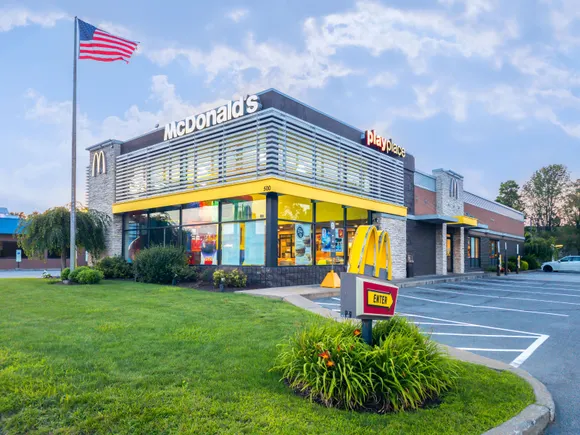
McDonald's CEO Chris Kempczinski outlined the company's latest strategic plan, called 'McDonald's > NEXT,' in an internal memo released on Monday. The plan covers menu innovation, customer co-creation, restaurant experience and productivity improvements, and redefining hospitality through people. Most initiatives are extensions of existing plans, including specialized teams for burgers, chicken, and beverages formed in 2025. The company also plans to test automated ordering systems and integrate employee onboarding and training tools to optimize operational efficiency.

Victoria's Secret CEO Hillary Super stated during the fiscal 2026 first-quarter earnings call that the company is designing "distinct" experiences for the Victoria's Secret and Pink brands to resonate with customers at every moment and channel of interaction. This strategy drove a 13% year-over-year increase in comparable sales and a 15% rise in net sales to $1.6 billion, exceeding company expectations.
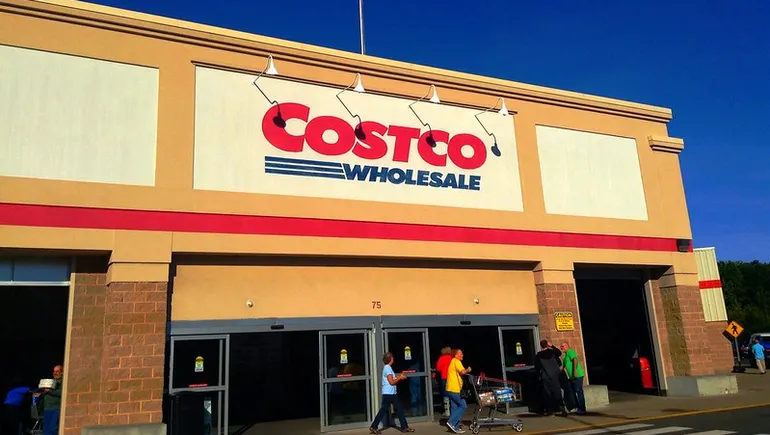
During its Q3 fiscal 2026 earnings call, Costco stated that personalized product recommendation carousels contributed nearly $500 million in digital sales, with conversion rates three times the norm. The company also faced the challenge of slightly lower online membership renewal rates, but mitigated the impact through targeted strategies.

CRM, journey analytics platforms, and AI-driven insights are ubiquitous, yet many enterprise growth leaders still face a persistent pain point: these intelligences have not been effectively converted into revenue across the full customer lifecycle. This is not an insight problem, but an execution problem. The article points out that data silos, disconnection between service and sales, and an overemphasis on acquisition while neglecting existing customer value are the three main causes of revenue leakage. It proposes that embedding AI into CRM and frontline workflows, enhancing rather than replacing employees through a human-in-the-loop model, treating service interactions as potential revenue moments, and shifting metrics from acquisition to customer lifetime value are key paths to bridging the execution gap.

Recent surveys show that rising prices for goods such as gasoline have dampened consumer confidence, with two-thirds of households already reducing spending. Reports from both the Conference Board and the University of Michigan indicate that inflation is straining household finances, retail sales growth is slowing, and economic outlook uncertainty is increasing.