


Latest news

The U.S. Supreme Court ruled that tariffs imposed by the Trump administration under the International Emergency Economic Powers Act were unlawful, and the Court of International Trade ordered refunds exceeding $166 billion. Experts say most consumers cannot calculate the refund amounts but will focus on whether companies proactively communicate and handle the matter fairly.

AI is profoundly transforming the job structure in the customer experience (CX) field. At the Customer Contact Week Las Vegas conference, CX leaders from Airtable and Homebase shared the birth of new roles (such as AI Agent Architect), the increase in internal promotion opportunities, and how CX teams have become a key link connecting product, engineering, and customers. This article outlines these changes and their impact on operations and talent strategies.

At the Customer Contact Week conference in Las Vegas, four CX executives and analysts shared the key challenges of implementing AI in contact centers, ranging from increased employee fatigue and lack of data governance to managing executive expectations, along with their respective approaches to addressing them.

Accenture's latest survey found that nearly 90% of travelers are willing to use AI travel agents to plan trips and find the best booking options, but as AI involvement deepens, traveler acceptance drops significantly: fewer than one-third of travelers allow AI to make final booking decisions (without involving payments), and only 7% allow AI to fully autonomously shop and complete purchases. The survey also shows that over half of travelers instruct AI agents to consider specific brands, but loyalty is not set in stone.

At the CommerceNext Growth Show held in New York, executives from companies such as Ulta Beauty, Stitch Fix, Tapestry, and Boot Barn pointed out that omnichannel retail has moved beyond a simple combination of online and in-store, now integrating AI agents and generative search. They agreed that regardless of technological iterations, customer experience and brand consistency, anchored by loyalty programs, remain the core drivers of sales.

The latest report from JKR and Kantar points out that customer experience is the core cornerstone of brand equity, with direct and indirect experiences contributing 71% of brand equity, while paid media accounts for only 28%. Brands that improve customer experience see their likelihood of market share growth increase to 2.5 times. Experts emphasize that advertising cannot replace real experiences, and long-term customer engagement is the driver of brand loyalty.
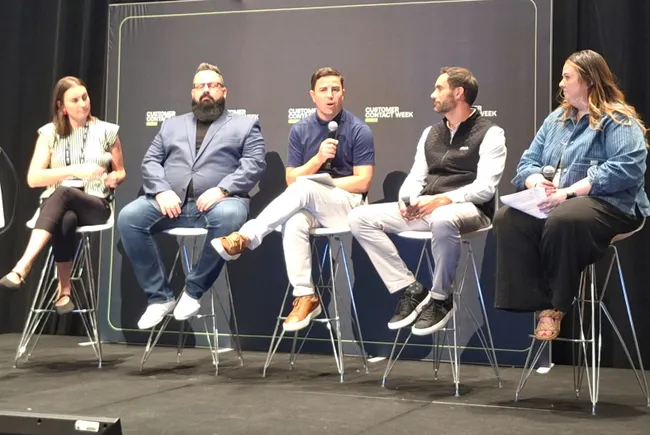
At Customer Contact Week in Las Vegas, CX leaders from companies such as Walmart and Fanatics shared practical experience in evaluating contact center AI, emphasizing that AI is a tool rather than a universal solution, transparency must be put into practice, and employee-facing AI applications are equally worth attention.

Emily Gessner, head of KeyBank's consumer digital business, stated that the bank is adopting a 'fast follower' stance, leveraging upcoming personalized insights features, a mobile-app-specific strategy, and AI assistant planning to address the industry inflection point facing regional banks. In the coming month, she will transition to lead the commercial digital business.

AI customer service failures are becoming a new challenge for enterprises. A study shows that three out of five consumers give up on automated support after repeating a question once. A Kim.cc survey found that 50% of consumers blame corporate leadership for AI support failures. Google's AI model's 91% accuracy rate seems high, but based on 5 trillion searches per year, it still produces billions of wrong answers, even leading to legal lawsuits. In a real case, a BMW dealership paid an additional $5,000 due to an AI chatbot's incorrect quote. These numbers highlight the substantial impact of AI failures on corporate reputation and finances.

Navy Federal Credit Union partnered with Qualtrics to conduct a synthetic data pilot, testing its similarity to and differences from real respondent data, and found that synthetic data performed well in rational judgment and bias reduction, but still fell short in emotion and empathy.